Search Results
956 results found with an empty search
- Mother’s Day – Fýkur yfir hæðir
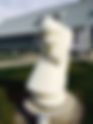
Yesterday was Mother’s Day and I was reflecting on this beautiful sculpture, Fýkur yfir hæðir / Moorland Flight by Ásmundur Sveinsson. He is one of my favorite Icelandic sculptors. In the 1933, he finished this 95 cm tall piece. Ásmundur lived and worked in the old leprosy hospital at in Reykjavík when he completed this sculpture. A woman is holding a small child in her arms. Ásmund said this about the significance of the sculpture: “I made it at Laugarnes. There was a blizzard raging outside, and I had the idea of making a sculpture of a woman trying to protect her child.” The photo of the white statue above is in front of the restaurant, Leifsbúð in Búðardal. Last summer, I spent a few days traveling around and relaxing (og slaka á) Dalasýsla with good friends, Jóhann and Guðný. We had the most delicious dessert and hot cocoa at this café. Yum! The title Fýkur yfir hæðir (Moorland Flight) is from the poem Móðurást (Motherly Love) by Jónas Hallgrímsson. This famous poem tells the tragic story of a mother carrying her young son through a storm across the Iceland moors. She died but saved her child. This statue in bronze is located at Ásmundarsafn and you can see a 3 minute video about this beautiful Ásmundur Sveinsson Museum here: The poem by Jónas Hallgrímsson is found in Icelandic here: The first lines are translated to English here: Blizzards are blinding the highlands tonight, blotting the pathways and landmarks from sight. Travellers who stray from the track will be lost, trekking this cold desolation of frost, bleak and unbounded and dreary. Who is the woman who wanders the snow, weeping, unsure what direction to go, clutching her slumbering son to her breast, slipping and falling and stopping to rest, weak from exertion and weary?
- Halldór Kiljan Laxness
On this day, 23. April 1902, Halldór Guðjónsson was born in Reykjavík. The family moved in 1905 to a farm where he grew up. At the age of 17, he published his first novel and over the years he wrote over 60 books. Halldór took the surname Laxness to honor his boyhood home. In 1955, he was awarded the Nobel Prize for Literature. To this day, he remains the only Icelandic author to be granted this award. The Nobel Foundation site says, “The Nobel Prize in Literature 1955 was awarded to Halldór Laxness “for his vivid epic power which has renewed the great narrative art of Iceland”.” My favorite book by Halldór Laxness is Sjálfstætt fólk (Independent People), which gave him the nod for the Nobel Prize. If you have not read this book, put it at the top of your ‘to-do list.’ He had four children with three different women. His house is now a museum operated by the government of Iceland. Halldór died 08. February 1998 in Reykjavík. In 2004, Halldór Guðmundsson won the Icelandic literary prize for best work of non-fiction with his biography of Laxness, “The Islander: A Biography of Halldór Laxness.” This is also a book for your list. So, today, we remember our Nobel Prize winner, Halldór Laxness on the anniversary of his birth. Til hamingju með afmælið (Happy Birthday)!
- Doors of Reykjavík
These photos were taken with my iPhone as I walked along the streets of Reykjavík for just a few hours. The city is alive with color. I think of the doors …. the people who go in and out of these doors. Open the door to happiness, dear friends and family. Góða nótt … Good night.
- The Icelandic Order of the Falcon
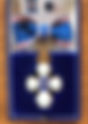
The Icelandic Order of the Falcon is the highest honor that the Icelandic state can bestow on individuals. The order was founded in 1921 during the royal visit to Iceland by King Christian X and Queen Alexandrine of Denmark. A royal decree, dated at Reykjavík on 3 July 1921, established the Icelandic Order of the Falcon. The decree stated: “We consider it right, in order to give official recognition to those men and women, Icelandic and foreign, who have made outstanding contributions to the honour and prosperity of the country in some way, to establish an Icelandic order, which We wish to be named ‘The Icelandic Falcon.’” The King of Iceland was the first Grand Master of the order. The original award was designed by Hans Christian Tegner, a professor at the Copenhagen Academy of Art, in collaboration with the royal secretary Jón Hjaltalín Sveinbjörnsson and Poul Bredo Grandjean, a heraldic expert. With the foundation of the Republic in 1944, the President of Iceland became the Grand Master of the Order of the Falcon and several changes were made to the design, including removal of the royal crown and replacement of the name of the founder with the date “17. júní 1944.” The President of Iceland typically presents Icelandic citizens and a few foreigners with the Order of the Falcon twice a year, based on the recommendation of the Falcon Order Council. The Order of the Falcon is conferred in five grades. You can read more here. Why should this be important to us? One reason is to better understand the Icelandic culture and history. Another is so we can properly congratulate our friend, Sunna Pam Olafson Furstenau, as the most recent recipient of the Knight's Cross of the Icelandic Order of the Falcon! Sunna was presented the award by President Guðni Th. Jóhannesson at Bessastaðir, near Reykjavik on August 31, 2017. Her sisters, Brenda and Barb, joined her at the presentation and her husband, Jeff, witnessed the proceedings via FaceTime video. Close friends and family from Iceland were also able to attend the award ceremony. Sunna, as the founder of Icelandic Roots, USA Representative of the Icelandic National League in Iceland, and current President of the Icelandic National League of North America, earned this prestigious honor in recognition for many years of dedicated service to improving relations between the people of Iceland and their cousins in North America. Congratulations Lady Sunna! #IcelandicOrderoftheFalcon #Iceland
- Understanding Icelandic Places - Part III
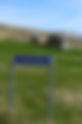
Today, we focus on key steps for finding and visiting the farms of our ancestors. In the last two posts, we explored Icelandic place names, from both a historical and modern perspective, so we can better understand our ancestral farms and places. Of course, a better understanding of places and how to find them prepares us for the very best part - visiting them!! Exploring our genealogy through the Icelandic Roots database and the wealth of information found there is a fascinating and highly rewarding endeavor. When time and resources allow, an essential component of our genealogy journey should be to visit the farms and parishes in Iceland where our ancestors lived, worked and worshipped. The experience of walking the land and seeing the same fields and mountains as one's ancestors is quite moving and creates cherished memories and photos. There are many travel and tourism related resources available for Iceland so we will focus on ancestral sites for now. Here are some key steps for finding and visiting them: Explore your family tree in the Icelandic Roots database. Please join if you have not done so already. Look for birth, death, marriage, and emigration locations. Print out the most relevant tree pages for reference. Check the locations from step 1 for geographic coordinates. Many are geotagged in the IR database and the IR volunteer team adds more every week. Use the tools from Understanding Icelandic Places parts I and II to identify the regions of Iceland you want to visit. Members can ask IR support for assistance if there is sufficient lead time before a trip. Incorporate your ancestral sites into your trip planning. Buy a big paper map of Iceland and circle all the places you might visit in colored marker. Choose different colors for categories such as lodging, attractions and ancestral sites. Prioritize your choices, based on time, budget, distance and expected travel conditions. Be sure to allow time to stop for photos, coffee and just to soak in the natural beauty of Iceland. Create a list of geographic coordinates for all your planned stops. You can use them in your GPS or smart phone. Even better, you can create a custom trip map in Google Maps and use your smart phone to navigate right to them! Most farms (and even many abandoned farms) have signs that identify them. (such as in the photo above) If you get the opportunity to speak with the current owners, your family tree printouts can be very helpful in explaining who you are and why you are visiting. (especially for those of us lacking much knowledge of Icelandic) Many of the historic parishes also have active congregations and small churches can be found throughout the country. That's it. Just go and explore. Meet some Icelandic cousins and have fun! Of course, it is considerably easier if you already live in Iceland. Your challenge is to come visit us in North America! #IcelandTravel #IcelandFarms #IcelandicRoots
- The Endurance and Courage of Sigurveig
The life of Sigurveig Sigurðardóttir was not an easy one. In 1865 on a day when she lay unconscious and low with typhoid, and her children were in various stages of recovery from it, a kind neighbour helped her sons bury their father, Kristofer Andrésson, who had just died from the disease. Sigurveig survived it and her 8 children never ceased to wonder at their mother‘s endurance and courage. She worked from early morning until late at night, at the same time training them to help as much as possible, in order to give them the bare necessities of life. In the baðstöfa of their turf house, while knitting, mending or making skör, the Icelandic shoes made from the thin sheepskins, she taught them to read, write and commit to memory, prayers and hymns. Ytri-Neslond viewing southwest, lake Myvatn and mount Vindbelgjarfjall, Skutustadahreppur. Image is copyright protected. To order a copy of YOUR family farm, contact Mats Wibe Lund. He has photos of almost every farm and special locations in Iceland. Her courage must have faltered a little in 1873 when her son, Sigurður, left for America and again ten years later when another son, Hernit, and her daughter, Sigurborg, decided they too would emigrate. In 1879, her endurance must surely have wavered when her daughter, Kristveig, died after giving birth to a baby girl. Is it any wonder, that in 1893, Sigurveig decided to leave her home, Ytri-Neslönd (Mývatnssveit, Reykjahlíðarsókn, S-Þingeyjarsýsla), in Iceland, to immigrate to Canada? Her remaining four children – Sigríður, Lilja, Pétur, and Sigurjón, and their families, including Kristveig’s daughter, who was named for her grandmother, accompanied her on that brave voyage – brave because Sigurveig was 80 years old and blind. When she arrived with her entourage late in August of that year, there must have been a grand celebration. It is recorded that she was so happy and cheerful to be in Canada and was delighted when taken to the garden to feel the size of the pumpkins and other vegetables. She was interested in everything, especially the oak trees that grew in the bluff at Grund. Can you picture blind Sigurveig running her hands over the rough bark of one of them, feeling the girth of the trunk? It would have been impossible for her to imagine how tall they were because there were no trees that tall in Iceland at that time. She came down with a cold during those first days, not unusual in Manitoba, but it developed into pneumonia. Three weeks after her arrival, she died. Her funeral was held outdoors at Grund. The grounds were crowded with people, many of them just over from Iceland and still wearing their Icelandic shawls and caps. It seems fitting that her funeral was held beneath those oak trees where her last days were spent happily with her beloved children. Today most of the giant oaks are gone, but there is a large one still at Grund and perhaps a few more in the area to remind us of one who was as sturdy as they – Sigurveig Sigurðardóttir. The descendants of Sigurveig are scattered throughout Canada, USA, and Iceland. From Sunna @ Icelandic Roots. Sigurður Kristofersson (AKA Sigurdur Christopherson), the son of Sigurveig who left Iceland in 1873, went first to Milwaukee, Wisconsin and stayed there until 1875. He became a well-known immigration agent as well as a leader among Icelandic settlers in Manitoba. He married Caroline Taylor, a niece to John Taylor. They are reportedly the first Icelandic couple married at Gimli. When Caroline was nine years old, her mother died and she went to live with John and Elizabeth Taylor along with her four sisters. John Taylor was a great help to the Icelandic settlers in New Iceland. There is much written about him including this essay. Also, much information on the family is found HERE. Besides all these stories, photos, and written information, at IR we have a very fun "Relationship Calculator." You can add YOUR NAME and a friend's name or the name of an ancestor from the Sagas, etc and click the Calculate button to see your relationship to that person. It is great fun and a feature of Icelandic Roots through the "Cousins Across the Ocean" project. If you have Icelandic Roots, please make sure to fill in the Cousins Form so we can preserve your story on the expanding database. Thanks again to Linda, for sharing Sigurveig's Story. If you have a family story that you would like featured, just send us an email. #IcelandicPioneers #Genealogy #MatsWibeLund
- Leif Erikson / Leifur Eiríksson Day
Each year on the 9th of October, we celebrate Leifur Eiríksson Day. This year, it is also Columbus Day. But remember ..... LEIF Landed FIRST! Leif was born at Eiríksstaðir in Iceland. His father, Eirík the Red, is another famous Viking. Eirík fled to Iceland from Norway after killing some of the King's men. Eirík also was outlawed in Iceland. He is credited with discovering Greenland. Eirík did not go with Leifur on the adventure to discover the New World. He had fallen off his horse on the way to the ship and thought this was a sign to not go. Leif became a Christian during a visit to Norway. King Ólaf was converting people to Christianity at the time. October 9th was chosen for Leifur Eiríksson Day because 09 Oct 1825, the Emigrant Ship, ‘’Restauration’’ landed in New York from Norway starting the wave of emigration from Norway. Top left: Statue at Eiríksstaðir, the home of Eirík the Red and birthplace of Leifur Eiríksson Top right: Leifur Eiríksson in front of the beautiful Hallgrímskirkja in Reykjavík. In 1929, the U.S. Congress authorized a statue of Leifur Eiríksson to be given to the people of Iceland on the 1000th anniversary of the Alþingi. The statue was placed in Reykjavik on 03 May 1932 Bottom left: Leifur Eiríksson statue at the Scandinavian Park in Minot, North Dakota Bottom middle: Leifur Eiríksson statue from Iceland that was at the 1939 World´s Fair. You can read more about this statue HERE. Bottom right: Leifur Eiríksson statue at the MN State Capital in St. Paul. There are many other Leifur Eiríksson statues. Click this link to see MORE LEIF ERIKSON STATUES. The Snorri West participants visited L´Anse aux Meadows, Newfoundland where the latest statue has been erected. It is the 3rd replica of the statue in Seattle. How are you related to Leifur and others from the sagas? Check out your family history! Want to learn more? Want to discover not just names and dates but the stories? Come to www.IcelandicRoots.com and click on 'Join Us.' #LeifEiríksson #Leifthelucky
- Lifelong Love of Books
The Icelandic Roots Library has received a spectacular donation of thirty-eight (38) boxes of Icelandic books from George Hanson. We are overjoyed and so thankful! The following news release comes from George. George Hanson donates his Icelandic Library to Icelandic Roots A lifelong love of books and a deep appreciation of his Icelandic heritage have defined the life of George Hanson. He was born in 1934, in Chicago, to Vigdís “Daisy” Guðmundsdóttir Hanson and George William Hanson. His father emigrated from Sweden, where his ancestors had been civil servants. His mother was born in Iceland, where her ancestors had been Lutheran pastors and bishop for centuries. From the age of four, George spent summers visiting his Icelandic “Amma” in Arborg, Manitoba, known as “New Iceland,” where he learned the ancient Icelandic language. After graduating with honors from Lake View High School in Chicago, George continued his education at Northwestern University, where he was on the Dean’s List and earned a Bachelor’s Degree in 1956. He taught Elementary School in Chicago for a few years while also studying for his Master’s Degree at the University of Chicago. In 1961 he accepted a teaching assignment at the U.S. Naval Air Station in Keflavík, Iceland, where he conducted research at the National Library of Iceland for his Master’s Thesis, titled “The National Library of Iceland During the Twentieth Century.” Returning to Chicago, he resumed his studies while working as a librarian at the University of Chicago, and in 1963 earned his Master’s Degree in Library Science. In 1964, George accepted a position at Truman College in Chicago. Within ten years, he was named Director of the Truman College Learning Resources Center and remained in that post for eighteen years, until his retirement in 1991. George continued his education at Chicago’s Loyola University, where he was awarded a fellowship. He spent a summer researching his dissertation in the large Icelandic library at Cornell University in Ithaca, New York, and earned a Doctoral Degree in Education, with high honors, from Loyola in 1979. His dissertation was titled “Icelandic Education: Tradition and Modernization in a Cultural Perspective.” In addition to reading, George’s interests include music, gardening, and sailing. He studied piano at the Chicago Conservatory of Music, was a dedicated Master Gardener, and an avid sailor. He received a full certificate from the U.S. Power Squadrons and sailed his boat on Lake Michigan and on Puget Sound after retiring to Port Townsend, Washington, in 1992. George has a deep love for Iceland and has visited the country twenty-five times. He also has traveled extensively in Europe and in the United States, exploring all fifty states. Always—whether traveling or at home—he has sought out bookstores, building a significant personal library of more than three thousand volumes. His wide-ranging interests are reflected in this library, which includes collections on Charles Dickens, English and world literature and history, theology, boating, music, gardening, and Iceland. Throughout his life, George has been attuned to his Icelandic heritage. This, combined with his love of books, led to friendships and correspondence with other Icelandic writers and librarians, including Dr. Richard Beck and Dr. Finnur Sigmundsson. His Icelandic books, most of them written in the language, comprise about a third of his extensive library. It is this Icelandic collection that George has donated to the Icelandic Roots Library. I appreciate the mission of Icelandic Roots and the dedication of its volunteers. George Hanson, 10 Oct 2017 The IR Board of Directors and volunteers are deeply thankful for this bequest from George. We are always grateful for donations. The gift of Icelandic books makes an important contribution to the preservation of our shared heritage and our language. We will continue to accept donations of Icelandic books and those about Iceland written in the English language. The US Federal tax code allows individuals and businesses to make cash and non-cash contributions to qualifying charities and to claim deductions for these contributions on their tax returns. Icelandic Roots is a 501(c)(3) nonprofit, non-political, charitable organization with the mission to educate, preserve, and promote the Icelandic Heritage, Culture, Language, and Genealogy. For more information on Icelandic Roots, see more on our website or contact us. #IcelandicBooks #IcelandGenealogy #GeorgeHanson
- Interesting People with Icelandic Roots
Want to know how you are related to Famous Icelanders or Interesting People with Icelandic Roots? We have a fun and interactive feature of the database to help you easily find out. To view in full screen, click on the start arrow and then click the icon in the lower right corner, which looks like four arrows. #IcelandGenealogy #FamousIcelanders #IcelandicRootsTutorials
- Icelandic Sign Language
Do you know someone in North America who uses sign language and fingerspelling? Are they connected to our shared Icelandic Story? If so, please contact Júlía Hreinsdóttir in Iceland. She will contact you. Icelandic Roots works in many ways to help people connect. We have an idea of a wonderful collaboration with people who use sign language in Iceland and in North America. Here is the Icelandic alphabet in Sign Language and the website for the Icelandic Association of the Deaf. #IcelandicAssociationoftheDeaf #IcelandicSignLanguage
- The Saga of Darlene Andrésdóttir
The Icelandic Roots Team is pleased to share a wonderful new video story. Find the link below this short introduction. The family featured in the video spent the summer learning more about their heritage through the Icelandic Roots Database. They traveled to Iceland in August 2017 and even enjoyed Menningarnótt - Culture Night. In the video, you will hear a comment, 'there are almost 610,000 people in the database.' This was the total in May 2017. However, as of today, there are almost 628,000 people in the IR Database. Our team is adding about 2,500 people per month as well as biographies, obituaries, photos, documents, interactive maps, histories, timelines, special reports, and much more. Enjoy this professional video and follow along as the family visits the farms of their ancestors. In the north, they were joined by a personal tour guide and IR Genealogist who also is their cousin! Icelandic Roots is a wonderful non-profit and charitable organization that is very unique. We have many dedicated volunteers who help people discover THEIR STORY. Access is online by joining as a supporting member. All proceeds go to 'Pay it Forward' for scholarships, heritage projects, and much more. Enjoy this wonderful video: Saga of Darlene Andrésdóttir Video Link The producer of the video and his sister are both applying to the 2018 Snorri Program. Cousins Across the Ocean Icelandic Roots Online Ancestors, Cousins, Farms Interactive Maps w GPS Coordinates Abandoned Farms Photos, Documents, Biographies Emigration, Ships, Ports Obituaries & Cemeteries Headstones & Special Reports Clergy & Churches Histories, Timelines, Saga Connections Snorri Scholarships Heritage Project Grants Education, Seminars, Webinars Promoting & Preserving Icelandic Heritage & Culture Come and Join Us #IcelandicFarms #IcelandGenealogy #IcelandTravel
- Would you like to be an IcelandicRoots detective?
One of the things we do is help our members find their genealogical history by "connecting" them to our Icelandic Roots tree. To do this, we use many tools including old Icelandic census records, parish records, regional records and genealogical books. Occasionally, we run up against a brick wall and would like to use this audience as a resource! A month ago, we received an unusual inquiry. That's because most Icelanders emigrated from Iceland during the emigration period (1870 - 1914) and emigrated in groups to Canada and the USA via Scotland. In this situation, the request came from Italy! The person's grandfather was Eduardo Teixeira Coelho, who was born on Terceira Island in the Azores on January 4th, 1919. Eduardo was a Portuguese comic book artist best known for his adventure series Ragnar le Viking! Eduardo's father was Gregario Bernardo Alexandersson Coelho. Portuguese law, in effect in the Azores, required Gregario to change his name from Alexandersson to Coelho. We were told that Gregario's father emigrated from Iceland and worked on a cable ship that was laying telegraph lines. Since the first ocean Icelandic telegraph was not laid until 1906, he must have emigrated before then, perhaps with the group of Icelanders that came to Curitiba, Brazil in 1873. Our search ends here. We continue to look at Icelandic census record for someone with the first name Alexander who matches any of our scenarios. We need your help! If you have any clues about this case, please send them to support@icelandicroots.com! We occasionally have mysteries like this one and hope to use this forum to learn more. Put on your detective hats!