
Icelandic Settlement Tour in Nova Scotia

By Shaune Jonasson
Keeping with the 2026 theme of settlements in North America, we close April with offering you a driving tour to the Icelandic sites in Nova Scotia. The communities settled were short-lived; however, some families did remain. Their descendants have lived there since the 1880s. With a keen interest in the history of the Icelandic communities, a group of dedicated individuals created The Icelandic Memorial Society of Nova Scotia, which was incorporated on July 29, 1998.
Icelanders who first arrived in Nova Scotia came from the failed settlement in Kinmount, Ontario, or they arrived by ship from Iceland at the Port of Nova Scotia. Their beginnings were similar; they left hardship behind and brought few belongings. Banding together, they became the community of Markland. A few years later, some of them moved further south to the already established village of Lockeport.
PORT OF HALIFAX
Halifax harbour has always been a seaport for cargo, livestock and people with its large, deep and sheltered harbour that is ice-free. In the very early years, the rail line to the remainder of Canada was not yet established, which made it difficult for passengers or cargo heading west. There was river access to inland Nova Scotia; however, those travelling further west had to do so with carts or on foot.

The Port of Halifax evolved and grew over the years. By 1928, Pier 21 was the first point of entry for those disembarking ships, but operations closed in 1971. The building remains as the last of the ocean immigration shed. In 2011, the Canadian government established it as the Canadian Museum of Immigration.

The Pier 21 exhibitions illustrate the immigration process of those arriving in Canada from 1867 to the present. These interactive displays have period actors to enhance the experience. As the national museum, there are numerous resources to access your ancestral family story upon arrival in Canada. It is well worth the time to visit Pier 21.
MARKLAND
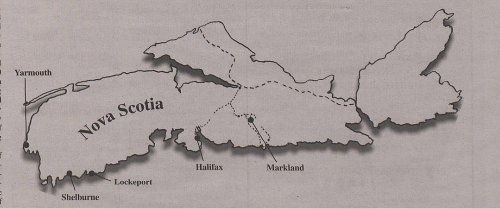
Markland is located a bit west and north of Halifax, between the areas of the Caribou Gold Mines and Moose River Gold Mines. The travel time from Halifax to the area depends on the route selected. Driving by car can be expected to take between 1 and 1 ½ hours to reach the area.
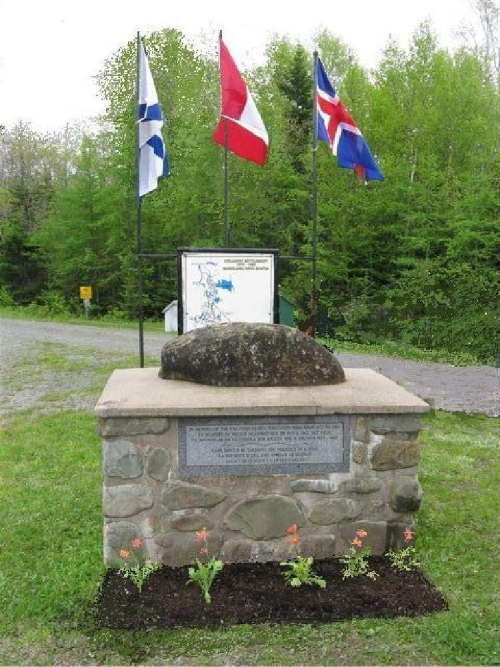
Upon arrival in Markland, visitors are welcomed by the cairn standing proudly under the flags of Canada, Iceland and Nova Scotia. The plaque dedicates this area to the memory of the settlers. The capstone from Iceland rests upon the base of stacked rocks, each one coming from the foundations of the settlers’ cabins.
Visitors are welcome to follow the map showing a pathway through the settlement. Between 1875 and 1882, there were 30 cabins built for the settlers, of which 28 have been located. Interactive signage is seen along the route, distinguishing the significance of the properties.

A replica log cabin has been constructed that honours the settlers. Open year-round, it serves as an interpretive centre regarding the life of the settlers. This log cabin’s construction, built with historical accuracy, was overseen by The Icelandic Memorial Society of Nova Scotia. The dedication ceremony for the log cabin took place in 2014.
The Icelandic Memorial Society of Nova Scotia annually organizes the Markland International Trails Day Walk through the Markland settlement. For 2026, it will be held on 6 June. Pack a lunch and your walking shoes for the 8 km hike. More details will be posted on the Society's website under Society Events.

Bookending Markland are the two gold mines where many of the settlers worked. Caribou Gold Mine (2 on the map) is to the east of Markland, on the eastern coast of Nova Scotia. Moose River Gold Mine (1 on the map) is just to the west of Markland. Here the visitor will also find the Moose River Gold Mines Provincial Park where they will be introduced to mining for gold and its history.
LOCKEPORT
The coastal town of Lockeport was already established before the Icelanders arrived. Its is on the eastern shore, approximately 200 km south of Halifax. Being on the ocean and a fishing community, it had a great appeal to the Icelandic settlers who arrived.
The Icelanders, who landed between 1878 and 1880, settled 5km east of the present town of Lockeport, near an area called East Green Harbour. Their stay was short, as most families left the area by 1883.
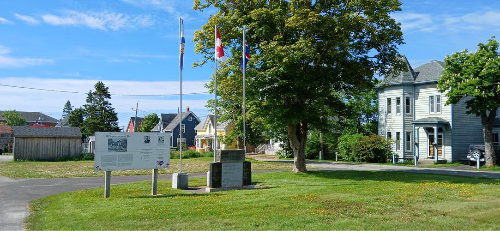
Here, visitors are welcomed with a memorial cairn dedicated to the Icelandic settlers. The Icelandic Memorial Society of Nova Scotia, in partnership with the Republic of Iceland, erected this cairn located on the property owned by Harold Hoskuldsson. The tablet situation at the base of the cairn is Atlantic Mist Granite found in Nova Scotia. The top tablet of the cairn is a light grey stone (grásteinn eftir samko- mulogi) from Iceland.
A verse on the cairn in English, French, or Icelandic reads:
“The land to which my work is dedicated is where my children’s cradle stands. ”

The Hoskuldsson family, who changed their family name to Huskilson, remained in the community after most others left.
Descendants continue to live there, where many generations have been active community members. In honour and memory of Lewis Huskilson (1911 - August 10, 2000) the Society has placed an historical sign.
Visitors are welcome to take a walking tour of the area to view the many houses of Icelandic families that have been preserved.
RESOURCES AND ADDITIONAL INFORMATION
Icelandic Roots Database
The Icelandic Memorial Society of Nova Scotia
We would like to acknowledge the efforts of the Society and recommend learning more about the Icelandic communities of Markland and Lockeport by visiting their informative website and their Facebook page.
The Icelandic Memorial Society of Nova Scotia: https://novascotiaicelanders.ca/
Halifax: Pier 21
Parks Canada


